Oil is up. The Fed is on hold. AI continues to dominate headlines. And yet the most important story in U.S. equities may be the one investors do not see immediately: what looks like broad market exposure can still mask concentrated risk.
In a recent Schwab Network interview, Richard Yasenchak, Chief Investment Strategist at Intech, unpacked the forces shaping today’s market. His focus was not on making a dramatic macro call. It was on identifying the interaction between geopolitics, inflation sensitivity, narrow leadership, and expectations—and what that means for how portfolios are built.
That perspective sits at the center of Intech’s approach. Intech ETFs are designed for investors who want benchmark-aware equity exposure while thinking more intentionally about diversification, concentration risk, and systematic rebalancing.2
The Market May Look Diversified, But Is It?
One of the clearest points from the interview was also one of the most useful: portfolios can look diversified while still being driven by a smaller group of names, sectors, or macro factors.
That observation goes to the heart of today’s large-cap market. Broad index exposure can still become dependent on a handful of dominant companies and themes. The result is that what appears diversified on the surface may be less balanced underneath.
For investors, that makes portfolio construction more than a background issue. It becomes part of the investment thesis itself.
AI Is Real. So Is Concentration.
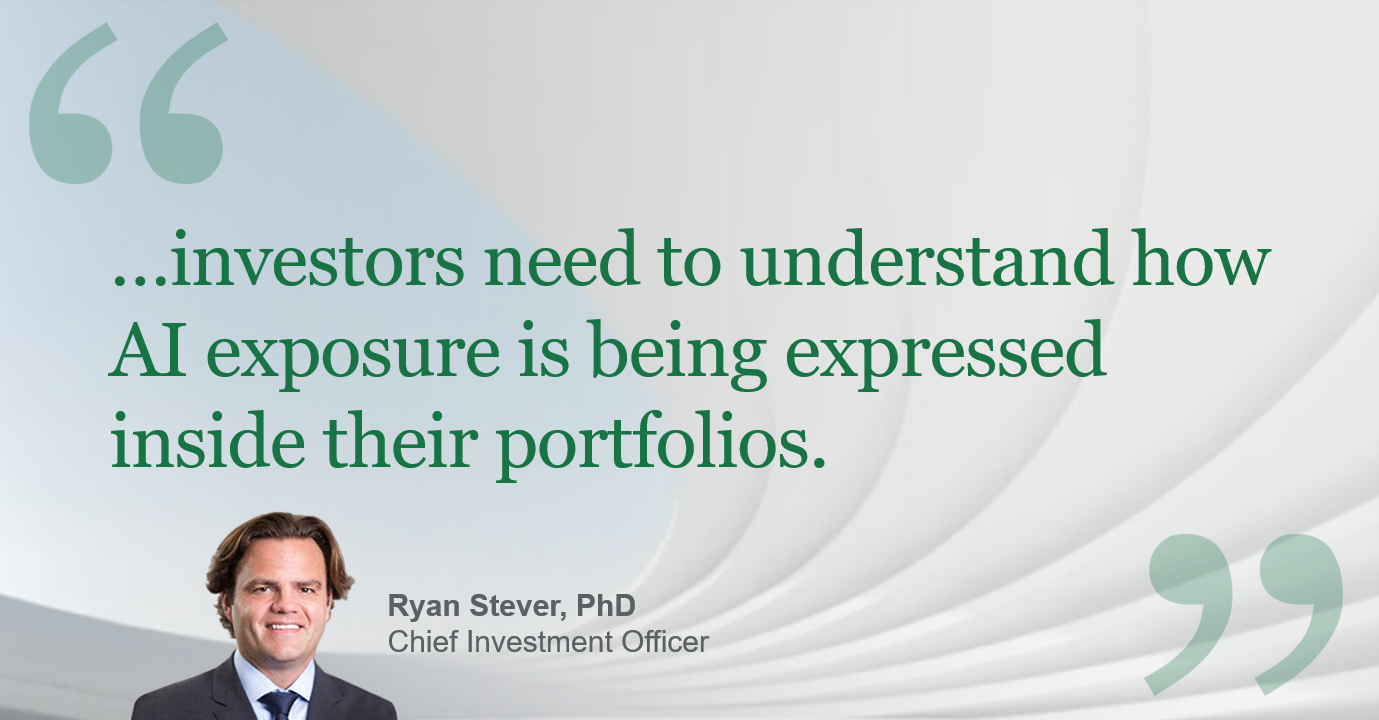
Richard also drew an important distinction around one of the market’s biggest drivers: AI is clearly a real earnings and capital spending story, but it is also a concentration story.
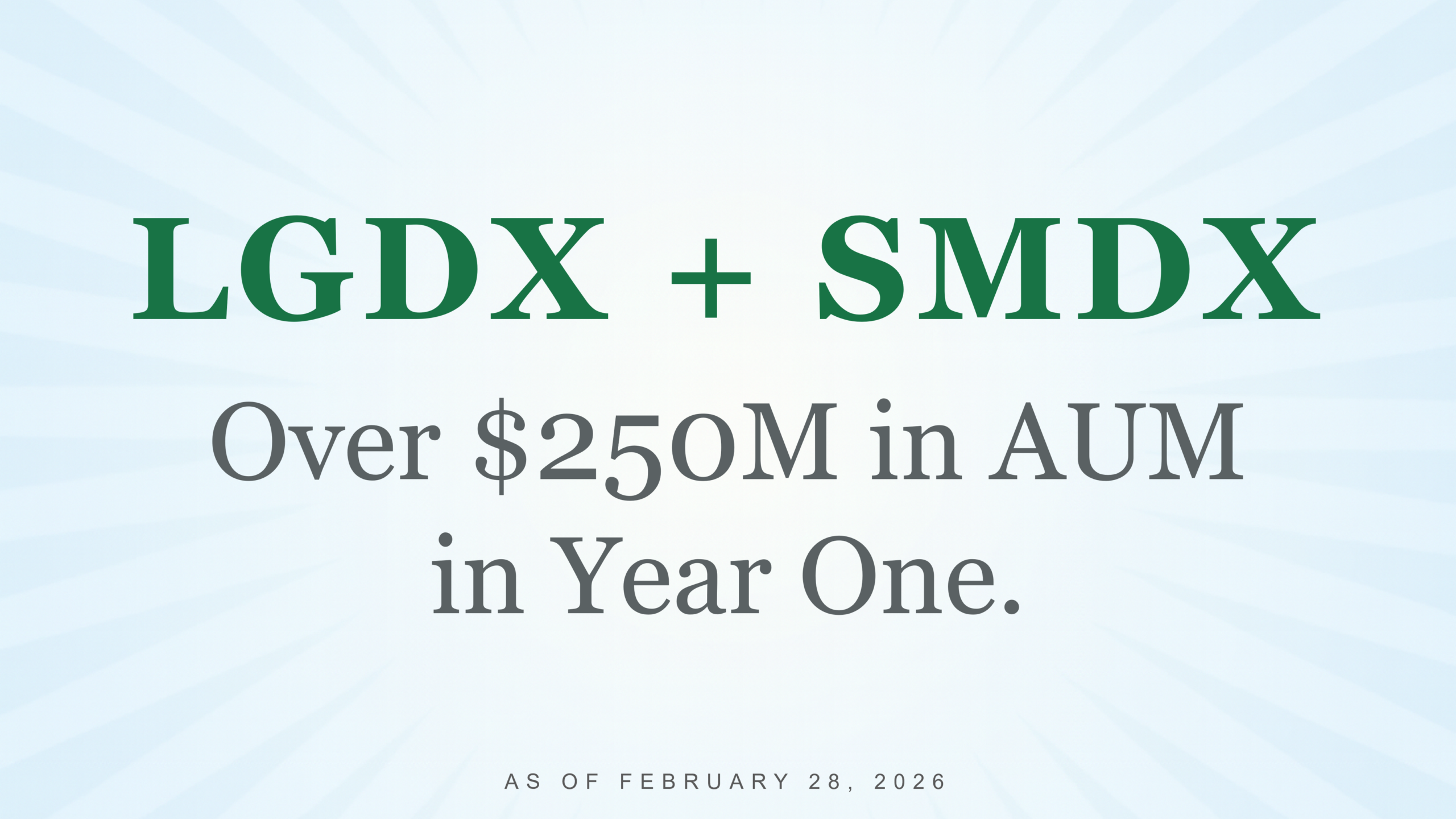
The video includes a discussion of the Intech S&P Small-Mid Cap Diversified Alpha ETF (Ticker: SMDX). Click here for standardized SMDX ETF performance.
The performance data quoted represents past performance. Past performance does not guarantee future results. The investment return and principal value of an investment will fluctuate so that an investor’s shares, when sold or redeemed, may be worth more or less than their original cost. Current performance may be lower or higher than the performance data quoted. Performance data current to the most recent month-end may be obtained by visiting the SMDX performance page.
That is an important balance to keep in view. The AI theme may continue to matter for earnings, capex, and investor interest. But it can also increase benchmark dependence on a relatively small number of names. Investors do not have to reject the theme to ask a more practical question: how much of the portfolio’s outcome is tied to it?
That is where intentional diversification becomes more relevant. The issue is not whether AI is real. It is whether portfolios are relying too heavily on it.
Are Fundamentals Alone Enough?
Another strong moment from the interview was Richard’s point that fundamentals alone may not be enough in this market.
That does not mean fundamentals don’t matter. It means they are operating in a market shaped by oil prices, interest rates, inflation sensitivity, geopolitics, and cross-stock interactions. Strong earnings and solid company-level data still matter, but they do not always explain the full behavior of the market.
For investors, that creates a more complicated environment. The question is not simply which companies are executing well. It is also how the broader portfolio responds when macro forces become more dominant.
Looking Beyond the Mega-Cap Trade
The interview also pointed to an area investors may increasingly need to consider: what happens below the biggest names.
If narrow leadership remains a defining feature of large caps, more intentional diversification may require looking further down in capitalization. That does not mean abandoning benchmark-aware exposure. It means recognizing that small- and mid-cap stocks can play an important role in broadening the opportunity set when market leadership narrows.1
This is where the conversation moves from market diagnosis to portfolio design. Large-cap concentration may be the headline story, but small- and mid-cap exposure can become an approach to consider when investors want fuller, more balanced access to U.S. equities.
Why Portfolio Construction Matters Now
The common thread across all of Richard’s points was simple: today’s market is not just a story about oil, the Fed, or AI in isolation. It is a story about how those forces interact—and how that interaction shapes the way risk is distributed inside a portfolio.
That is why portfolio construction matters. Investors may still want core equity exposure. But they may also want to think more carefully about how that exposure is built, how concentrated it has become, and whether diversification is being assumed or refreshed more intentionally.
In a market defined by rising oil, a waiting Fed, and narrow leadership, surface-level diversification may not be enough.
Explore the Intech Approach
If today’s market is making broad exposure feel less broad, it may be time to rethink how core equity is built.